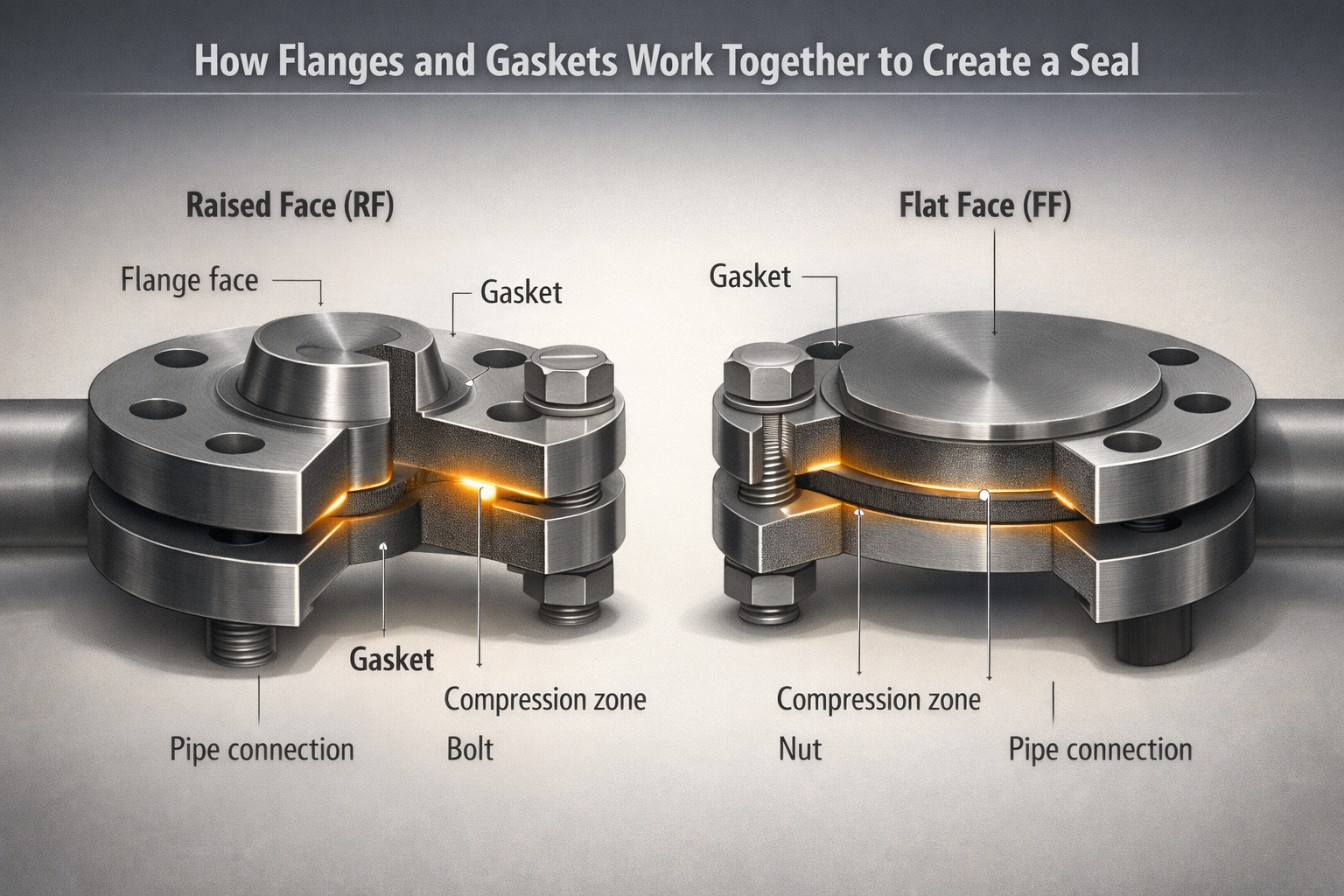
A flanged joint has two main parts. The flanges are the strong metal rings that bolt together. The gasket is the soft part that sits between them to create the seal. You need both to be correct for the connection to be leak-proof.
Think of it like closing a jar. The jar and lid are the flanges, they provide the structure and clamping force. The rubber seal inside the lid is the gasket, it fills the tiny gaps to keep the contents from leaking out.
What a Flange Gasket Does
A flange gasket is a mechanical seal. Its job is to stop liquids or gases from escaping at the connection point. It does this by flowing into the microscopic imperfections on the flange faces when you tighten the bolts. This creates a tight barrier.
Gaskets are also important for safety. They stop hazardous or corrosive chemicals from leaking, which protects workers and the environment. A failed gasket can lead to system shutdowns, costly repairs, and safety incidents.
Common Types of Flange Gaskets
Gaskets come in different designs, each for a specific job. The design must match your flanges and your system’s needs.
| Gasket Type | Key Features | Best For | General Pressure/Temp Suitability |
| Full-Face Gasket | Covers the entire flange face, including the bolt holes. | Low to medium pressure. Often used with flat face flanges. | Low to Medium |
| Ring Gasket (Inside Bolts) | Sits inside the ring of bolt holes. | Common for standard raised face flanges. | Low to Medium |
| Spiral-Wound Gasket | Made of alternating metal and soft filler layers. Flexible and strong. | High temperature and pressure. Handles system stress well. | Medium to High |
| Ring-Type-Joint (RTJ) | Solid metal (e.g., stainless steel). Fits into a special groove in the flange face. | Very high-pressure systems, like in oil and gas. | Very High |
| Kammprofile Gasket | Has a serrated metal core with soft material on top. Provides a reliable seal. | High temperature and pressure where a tight seal is critical. | High |
How to Choose the Right Gasket: 4 Key Factors
Choosing a gasket is not just about size. You must consider what’s inside your pipe and the conditions it operates under.
1. What Fluid is in the Pipe?
The gasket material must not react with or degrade because of the fluid. For example:
- Oil or fuel: You might use a nitrile (Buna-N) rubber gasket.
- Strong acids or chemicals: PTFE (Teflon) gaskets are often a good choice.
- Hot water or steam: Compressed fiber or graphite gaskets work well.
2. What are the Temperature and Pressure?
Every gasket material has limits.
- Temperature: A material that works at room temperature can fail at high heat. Always check the gasket’s maximum operating temperature, not just its short-term rating.
- Pressure: Higher pressure needs a stronger gasket design, like a spiral-wound or RTJ gasket.
3. What Kind of Flanges Do You Have?
The gasket must match the flange type, size, and face finish.
- Size & Standard: Flange dimensions are set by standards like ASME B16.5 (for pipes up to 24 inches) or B16.47 (for larger pipes). Your gasket must match this standard exactly.
- Face Finish: The smoothness of the flange face matters. A very smooth face needs a different gasket than a roughly machined one.
4. How Much Bolt Force is Applied?
The bolts squeeze the gasket to create the seal. This force is called flange load. Some soft gaskets need less force to seal. Harder gaskets, like metal ones, need much more force. If the bolts aren’t tight enough, a hard gasket won’t seal. If they’re too tight, a soft gasket can be crushed and fail.
Installing a Gasket Correctly: A Quick Guide
A good gasket can fail if it’s not installed right. Here are the basics.
- Check the Flanges: Make sure the flange faces are clean, undamaged, and properly aligned. Dirty or bent flanges will leak.
- Use a New Gasket: Never reuse an old gasket. It has already been compressed and won’t seal properly again.
- Center the Gasket: Make sure it sits evenly between the flanges.
- Tighten Bolts Evenly: Don’t just tighten one bolt all the way. Use a crisscross pattern and tighten them a little at a time. This applies even pressure.
- Use the Correct Torque: Follow the recommended bolt torque for your gasket type and size. A torque wrench helps get this right.
Common Reasons Gaskets Fail
Knowing why gaskets fail helps you prevent problems.
- Wrong Material: The gasket breaks down because of the fluid, heat, or pressure.
- Poor Installation: Uneven bolt tightening, misaligned flanges, or reusing an old gasket.
- Wrong Size: A gasket that is too big or too small won’t seal the flange faces properly.
Frequently Asked Questions
Q: Can I use any gasket with any flange?
A: No. The gasket must match the flange’s pressure class, size standard (like ASME B16.5), and face type (raised face, flat face, RTJ groove). Using the wrong one will likely cause a leak.
Q: My system has vibration and temperature changes. What gasket should I use?
A: A spiral-wound gasket is often a good choice here. Its layered design lets it handle movement and thermal expansion better than a solid gasket.
Q: What are fugitive emissions, and why do they matter for gaskets?
A: Fugitive emissions are tiny, unintended leaks of gas from pipe connections. In many industries, these are regulated. Choosing a gasket designed for low emissions (like certain spiral-wound types) is important for compliance and environmental safety.
Conclusion
A flange without a gasket is just two pieces of metal. The gasket completes the seal. Picking the right one means looking at what’s in your pipe, how hot and pressurized it is, and what flanges you have. Doing this prevents leaks, keeps people safe, and avoids costly downtime.
Need help selecting the perfect gasket for your specific flanges and application? Our technical team can guide you to the right material and design for a leak-proof seal. Submit your project details for expert support: http://texasflange.com/lp12/